2025-2026 Legislative and Public Policy Priorities
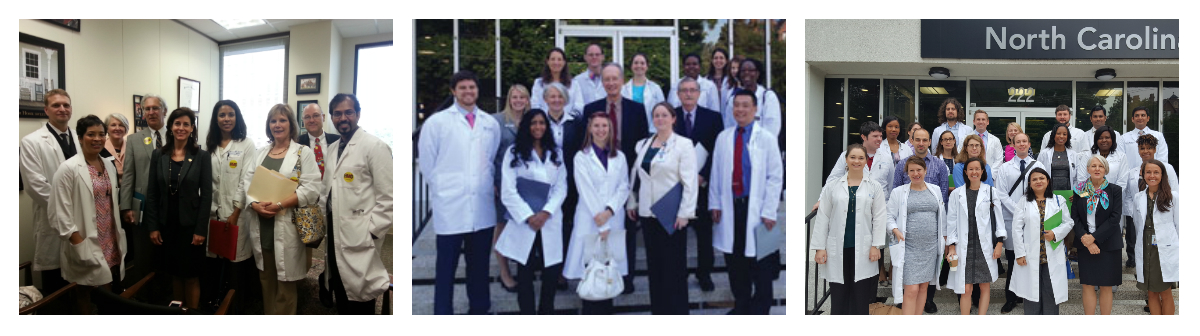
North Carolina's General Assembly is currently in session. NCPA staff and lobbyists are monitoring bills and have been on hand for legislative discussions of great significance to psychiatry. NCPA is available to serve as a resource to policy leaders in the state. We are focused on the following issues of importance to mental health...
-
Enforce Mental Health Parity in North Carolina
-
Ensuring Adequate and Qualified Workforce
-
Promoting Quality Behavioral Health Care Access
-
Decriminalizing Mental Illness and Substance Use Disorders
For more information regarding NCPA's legislative priorities, email [email protected] View NCPA's Weekly Legislative Updates.
Where Can I See What APA is Doing? Visit APA’s Advocacy Action Center at psychiatry.org/advocacy for the latest information on APA’s advocacy activities. The members-only Advocacy Action Center has an up-to-date list of recent actions taken by APA.
Weekly Legislative Updates
August 3, 2026
Executive Summary
Legislators returned to Raleigh this week to clear a short but consequential list of items before leaving town for an extended break. The principal work centered on budget and elections legislation. HB 268 (2026 Budget Technical Corrections – II), HB 562 (Budget Technical Corrections Modifications), and HB 958 (Election Law Changes) were ratified and presented to Governor Josh Stein on August 7. The General Assembly also adopted its adjournment resolution after the August 6 session, setting return windows for August 31, September 28–30, October 26–28, November 16–19, and November 30–December 18 before final sine die adjournment. Those return sessions are limited to specified categories of business, including veto overrides, appointments and confirmations, litigation-related legislation, election-law matters, conference reports already in process, concurrence matters, and further adjournment action. Governor Stein is expected to veto HB 958, setting up a potential override fight; however, House leadership has indicated that no voting sessions are expected until the November session, with the August, September, and October return dates likely to function as procedural check-ins unless leadership calls members back for an emergency or other urgent matter.
HB 328 – Regulate Hemp-Derived Consumables
HB 328, Regulate Hemp-Derived Consumables, remained one of the most closely watched unresolved issues of the week. The Senate had adopted a conference report on July 2, and the bill was re-referred to the House Rules, Calendar, and Operations Committee on July 30. The proposal would conform North Carolina’s hemp definitions to the new federal total-THC framework, prohibit possession of covered hemp-derived consumable products by persons under 21 and sales to persons under 21, regulate kratom products, and add xylazine as a Schedule III controlled substance. The pending conference version also reflects the federal standard scheduled to take effect November 12, 2026, including a 0.4 milligram total-THC ceiling per container for final hemp-derived cannabinoid products intended for human or animal consumption.
The debate exposed the central tension between stronger child-safety enforcement and the economic impact on North Carolina’s hemp sector. Law enforcement organizations urged passage of HB 328 as a way to give police and prosecutors more tools to prevent sales of intoxicating hemp products to minors, while hemp businesses and advocates argued that the THC thresholds in the Senate-approved version would effectively eliminate most products now sold by dispensaries, breweries, restaurants, convenience stores, and other retailers. Industry opponents said they support age limits, licensing, testing, labeling, and similar consumer-protection rules, but oppose a framework they view as a near-ban on legal hemp products.
House leaders ultimately declined to take up the bill for a vote during the August return session. Speaker Destin Hall said the current legal landscape is not workable because North Carolina has few effective rules governing these products, including age restrictions, but he also acknowledged the need to examine the issue further before moving the legislation. He indicated that he plans to appoint a group of House members to study the proposal and return with recommendations later this year. As a result, HB 328 is not dead, but it remains pending in the House, leaving the current hemp-derived consumables market and related enforcement questions unresolved until lawmakers return to the issue in a later session.
HB 562 – Budget Technical Corrections Modifications
HB 562 makes targeted changes to the 2026 state budget and related legislation. The bill redirects $1.5 million in nonrecurring funds within DHHS to HBOT 4 Heroes for hyperbaric oxygen therapy treatment for veterans diagnosed with traumatic brain injury or post-traumatic stress disorder. It also revises selected directed grants, including changes involving Harnett County and Anson County infrastructure funding, and makes administrative adjustments affecting state agencies and budget implementation.
The legislation also adjusts funding for the Office of the State Fire Marshal and the Department of Labor, including recurring funding for additional administrative and Building Code-related positions, makes technical changes to insurance regulatory funding, and authorizes an America’s Semi quincentennial license plate through the Division of Motor Vehicles. Most provisions are effective July 1, 2026, and the bill was presented to the Governor on August 7.
July 27, 2026
The North Carolina General Assembly returned to Raleigh this week under a limited operating schedule, with the Senate driving nearly all substantive activity while the House held skeleton sessions and did not take votes. The Senate advanced HB 268, the 2026 Budget Technical Corrections bill, and continued committee work on elections, appointments, and local governance. With budget corrections, election administration changes, and regulatory issues still unresolved, lawmakers are expected to continue operating in a limited-session posture as the House prepares to resume fuller activity next week.
Hemp regulation also remained politically sensitive, with business owners urging lawmakers to reject a proposal that would effectively ban most hemp-derived consumable products while law enforcement and prosecutors pressed for action next week.
July 6, 2026
Executive Summary
The North Carolina General Assembly remained in recess during the week of July 6 and is scheduled to return to Raleigh on July 27 for potential voting sessions. Although legislators were away from the Capitol, Governor Josh Stein continued acting on legislation presented to his desk, signing the FY 2026–27 Appropriations Act along with several other measures while issuing one veto. Meanwhile, state agencies continued implementing newly enacted policies, including transportation funding priorities and the creation of a new Health Care Affordability Commission.
Health Care Affordability Commission
Governor Josh Stein signed Executive Order No. 39 creating the North Carolina Health Care Affordability Commission, which will develop recommendations to lower health care costs, improve transparency, and expand access to care statewide. The commission will be co-chaired by State Treasurer Brad Briner and N.C. Department of Health and Human Services Secretary Dev Sangvai.
Voting members include: Brad Briner, Dev Sangvai, Sen. Gale Adcock, Sen. Benton Sawrey, Rep. Allen Buansi, Rep. Tim Reeder, and Office of State Budget and Management Director Kristin Walker.
Advisory members include: Josh Dobson, President & CEO, North Carolina Healthcare Association, John Green, CEO, Iredell Health System, Sandra Greene, Senior Research Fellow, UNC Cecil G. Sheps Center for Health Services Research, Tina Gordon, CEO, North Carolina Nurses Association, Steve Keene, President, North Carolina Medical Society, Rachel Keever, M.D., CEO, Foundation for Health Leadership and Innovation, Mark McClellan, M.D., Director, Duke Margolis Center for Health Policy, Karen McLeod, President & CEO, Benchmarks, Paige Ouimet, Professor, UNC Kenan Institute of Private Enterprise, Cristy Page, M.D., CEO, UNC Health and Dean, UNC School of Medicine, Michelle Ries, Director, North Carolina Institute of Medicine, Nicholas Riggs, Director, North Carolina Navigator Consortium, Rob Robinson, President, North Carolina Association of Public Community Health Plans, Gary Salamido, President and CEO, NC Chamber, Dr. Tunde Sotunde, M.D., CEO, Blue Cross and Blue Shield of North Carolina, Laurie Stradley, CEO, Impact Health, Dave Werry, President, Well, Tom Wroth, M.D., President & CEO, Community Care of North Carolina.
C.S. Hollis & Associates plans to monitor the commission's meetings and provide updates as recommendations begin to take shape.
Governor’s Bill Actions
Although the legislature is away from Raleigh, Governor Josh Stein continued acting on bills presented to his desk. During the week of July 6, the Governor signed several measures into law, including the FY 2026–27 Appropriations Act and HB 1104 – Improve the Involuntary Commitment Process and Enhance Public Safety. He vetoed HB 437 – Drug-Free Homeless Service Zones/Unauthorized Public Camping.
July 2, 2026
Executive Summary
North Carolina’s General Assembly delivered one of the most active legislative weeks of the year, advancing the FY 2026–27 budget, adopting the adjournment resolution, and moving several major policy bills. The adjournment resolution formally schedules lawmakers to return the week of July 27 for additional votes, and CSH anticipates the legislature will continue to set date‑certain voting sessions throughout the remainder of 2026 to finalize conference reports, address corrections, and manage emerging issues.
This week also marks a key political milestone: the state is now just over 100 days from the start of early voting, adding urgency to legislative timelines, agency implementation, and stakeholder engagement.
FY 2026–27 State Budget
Lawmakers advanced a $34.4 billion spending plan establishing statewide priorities across healthcare, human services, education, transportation, workforce development, public safety, and disaster recovery.
Healthcare & Medicaid
The budget delivers one of the most significant healthcare investments in recent years, with emphasis on:
- Expansion of behavioral health infrastructure and crisis response capacity.
- Strengthened Medicaid reimbursement stability and full funding of Medicaid obligations.
- Increased psychiatric care capacity statewide.
- Modernization of health data systems and program integrity efforts.
- Major child‑health investments, including funding for a new Children’s Hospital.
- New compliance requirements and administrative restructuring affecting hospitals, physicians, behavioral health providers, and community organizations.
House Bill 56 – Technical Corrections
HB 56 introduces targeted adjustments to the enacted budget, including:
- Increased funding for MAHEC.
- Offsetting reductions to Healthcare Workforce Programs Expansion.
- Revised Medicaid cost‑sharing provisions, directing DHHS to set copayments at the maximum federally allowed level (with specific exceptions).
- Delayed implementation of new child care subsidy reimbursement rates to October 1, 2026.
- Multiple corrections to directed grants and nonprofit recipient names.
HB 328 – Hemp, Kratom, and Synthetic Drug Regulation
HB 328 proposes major regulatory changes, including:
- Adoption of a total THC standard covering THCA, delta‑8, delta‑10, and other cannabinoids.
- Prohibition beginning November 12, 2026, of consumable hemp products exceeding 0.4 mg total THC per container or containing synthetic/converted cannabinoids.
- Establishment of a minimum age of 21 for purchase, sale, delivery, and possession of hemp‑derived consumables and kratom.
- Escalating civil penalties for retailers and a Class 2 misdemeanor for underage possession.
- Updates to the Controlled Substances Act, including classification of xylazine as Schedule III.
The Senate passed the conference report July 2nd; the House can take it up when members return later this year.
June 22, 2026
Budget Negotiations
The budget remains the central unresolved issue of the session, and its absence is being felt across a wide range of stakeholders. Legislative leaders have expressed confidence that an agreement can be reached, but the timing and final structure of the package remain open questions. Until a deal is finalized, many funding decisions that agencies and local governments are awaiting will remain in limbo.
Committee Action
In committee this week, the Senate Judiciary Committee considered two measures that reflect the range of policy issues before the General Assembly this session.
The first, HB 1104 – Improve IVC Process and Enhance Public Safety, has been one of the more closely watched public safety bills of the session. The legislation would strengthen North Carolina’s involuntary commitment process, with a focus on ensuring that individuals with serious mental illness and criminal justice involvement receive timely evaluations and appropriate treatment. The committee adopted a technical amendment during its review, including changes related to incapacity-to-proceed procedures in criminal cases. The bill continues to advance and is not currently expected to face significant opposition.
The committee also considered HB 565, which addresses the growing use of artificial intelligence in medical billing. As AI-based tools become more common in healthcare administration, the legislation seeks to prevent algorithms from being used in ways that could artificially inflate costs or create pricing disparities for patients and payers. Supporters emphasized the importance of transparency and accountability as these technologies become increasingly embedded in billing and reimbursement systems.
June 15, 2026
Health policy was one of the most active areas of the week. The House Health Committee received a Behavioral Health Investment Update from Department of Health and Human Services officials Kelly Crosbie, Assistant Secretary for Mental Health, Developmental Disabilities, and Substance Use Services, and Dr. Carrie Brown, Deputy Secretary for Facilities, Behavioral Health, and IDD. Their presentation highlighted recent state investments in crisis response, justice-involved behavioral health services, workforce expansion, and child welfare initiatives. DHHS pointed to programs such as BH Scan, the statewide bed availability system, and MOORS teams, which provide mobile crisis intervention services. The department reported progress in obligating and spending available funds, while emphasizing that long-term sustainability will depend on continued coordination and the ability to maximize federal and private funding opportunities.
The Senate Health Care Committee also advanced discussion on House Bill 1104, Improve IVC Process and Enhance Public Safety. Presented by Representative Reeder, the bill seeks to update North Carolina’s involuntary commitment process, particularly for individuals with mental illness who become involved with the criminal justice system. Committee action included an amendment removing a UNC-directed study requirement after the university agreed to participate collaboratively in a broader review. Major provisions address telehealth evaluations in county jails, capacity challenges at state psychiatric facilities, and updates to outpatient involuntary commitment statutes. In the same meeting, Senator Sawrey presented amendments to a Medicaid program integrity proposal that incorporated provider feedback on employee management practices, reporting requirements, and technical language.
Looking ahead, next week is expected to be driven primarily by budget negotiations as legislative leaders continue working toward a final agreement and an early July adjournment target. Activity at the General Assembly will also include a high-profile visit on Tuesday from the Stanley Cup champion Carolina Hurricanes, adding a celebratory note to what is otherwise likely to be a budget-focused week. At the same time, the Senate has announced that policy committees will begin winding down their work, a signal that leadership is attempting to narrow the agenda, limit new committee activity, and position the legislature to wrap up the session in the coming weeks.
June 8, 2026
Executive Summary: Lawmakers returned to Raleigh this week with relatively light committee activity, while budget negotiations continued largely behind the scenes. Legislative leaders remain focused on reaching a budget agreement, although the timing remains uncertain. Key developments this week included movement on transportation and healthcare legislation, continued debate over property tax relief, new public safety proposals, hemp and kratom regulation, energy and technology measures, disaster recovery funding, and notable election-related news as Rep. Sarah Stevens announced she will resign from the House to focus on her campaign for the North Carolina Supreme Court.
Healthcare
The Senate Health Care Committee met June 11 to consider legislation addressing provider regulation and Medicaid program integrity. HB 34 was presented with a proposed committee substitute addressing Medicaid provider agreements, electronic health record vendor identification, unique login requirements, and provider notification obligations following certain criminal convictions. The substitute also strengthens licensing restrictions for bad actors and expands the authority of medical credentialing committees. SB 978 was also considered. Senator Burgin said provisions related to hospital consolidation oversight were removed amid ongoing developments involving healthcare consolidation in the Raleigh market. Remaining provisions focus on whistleblower protections, employment practices, and executive compensation, while an additional amendment broadens the State Treasurer’s flexibility in conducting healthcare examinations and oversight. The bill received a favorable report and was referred to Judiciary.
Statewide Legislative and Executive Developments
The House also passed HB 1173, known as “Jaleeyah’s Law,” a sweeping anti-gang proposal intended to strengthen penalties and broaden tools for prosecutors and law enforcement. Supporters described the bill as a response to gang recruitment and violence involving minors, while opponents raised concerns that its definitions could sweep too broadly and create due-process issues. Lawmakers also introduced legislation that would prohibit the sale of hemp consumables and kratom to anyone under age 21, continuing a broader debate over how the state should regulate hemp-derived intoxicating products and youth access.
On the executive branch side, the Department of Health and Human Services announced $10 million in funding for 39 local EMS agencies through the NC Rural Health Transformation Program to strengthen the rural EMS workforce and expand access to behavioral health and substance use services. In a separate development, Gov. Josh Stein asked Congress for $10 billion in additional Hurricane Helene relief funding, underscoring the state’s continued push for federal recovery support.
June 1, 2026
This week, the House Judiciary 2 Committee considered HB 1104, IVC and Public Safety Committee. The legislation was developed in response to the tragic killing of Iryna Zarutska and seeks to address gaps in the state's involuntary commitment and public safety systems. Key provisions include expanding mental health evaluations within county jails, increasing the number of available state psychiatric hospital beds, and improving data sharing between medical and judicial systems.
On June 3, the Senate voted to override Governor Stein's veto of HB 87, Education Choice for Children Act, allowing the legislation to become law. The measure enables North Carolina to participate in a federal tax credit scholarship program. Under the program, taxpayers may receive a federal tax credit of up to $1,700 for donations made to approved scholarship-granting organizations that support educational opportunities for students.
Current projections suggest a budget proposal could be released around June 22, with final passage targeted before July 4, though leadership emphasized that this timeline remains subject to change.
May 18, 2026
House Health addressed a growing issue in North Carolina this week with a report on emergency department boarding. Carolina Complete Health Network was front and center during the committee meeting, presenting findings from its pilot program aimed at reducing behavioral health boarding for children in emergency departments. The program focused on a three-pronged approach: dedicated behavioral health clinicians in the ED, community-based mobile outreach response, and public education on available crisis services. A key component of the program was its payer-blind nature, serving all eligible children regardless of insurance status. The outcomes demonstrated significant success. The average hold time for children with behavioral health needs in the ED decreased from four to six weeks to 2.1 days, while the “left without being seen” rate decreased by 45%. CCHN plans to enter phase two by expanding into less resource-dense areas and exploring statewide implementation.
May 11, 2026
As reported earlier this week, Speaker of the House Dustin Hall and Senate President Pro Tempore Phil Berger held a joint press conference outlining the key framework established to begin final work on North Carolina’s budget. Many of the major issues that had previously stalled negotiations appear to have been addressed. Lawmakers now have a clearer understanding of proposed state employee raises and anticipated tax rate changes moving forward. With many of the most difficult negotiations reportedly resolved, conference discussions on the budget are expected to move quickly.
The House Health Committee met Tuesday, May 12, with a substantial agenda focused heavily on healthcare and child services. First on the agenda was HB 1166 – Reorganize & Fund Rare Disease Advisory Council. This legislation seeks to reorganize appointments to the Rare Disease Advisory Council and transfer the council under the Department of Health and Human Services (DHHS). The bill builds upon legislation originally enacted in 2015 and continues North Carolina’s longstanding leadership in rare disease advocacy, as the state was the first in the nation to establish such a council within state government. Another major topic of discussion was HB 1086 – Child Care and Early Childhood Development. The bill has drawn significant stakeholder involvement, including participation from the YMCA, the North Carolina Chamber, and Smart Start. The legislation proposes the creation of a career-ready lead teacher program, expansion of childcare academies, and funding for mental and behavioral health services for children and families within childcare facilities. The committee also considered HB 1090 – Rural Healthcare Infrastructure Fund, which appeared to receive strong bipartisan support. North Carolina currently has the second-largest rural population in the country. Over the last decade, nine rural hospitals have closed their OB services, while twelve rural hospitals have closed entirely since 2006. The bill seeks to establish a dedicated infrastructure improvement fund recognizing the state’s responsibility to maintain healthcare access for rural communities. The proposed fund would be eligible to receive state, federal, and economic development dollars. Additionally, the legislation creates a Rural Healthcare Council with appointments made by both the General Assembly and the Governor.
The Senate Health Care Committee also drew significant statewide attention this week following the introduction of Senator Burgin’s SB 863 – Duplicated Inspections in Adult Care Homes. Reports from facilities across the state have highlighted concerns regarding excessive duplicate inspections at adult care homes. The bill aims to reduce redundancy while maintaining patient safety standards. During committee discussion, lawmakers clarified that many of the inspections in question were not directly related to healthcare services, but instead focused on overlapping regulatory areas such as pest control inspections. Under the proposal, if one qualifying inspection has already occurred, other state departments or local entities would be required to recognize that inspection rather than conducting an additional review. The legislation is currently being worked on alongside DHHS due to concerns surrounding specific language and ensuring the bill appropriately balances reducing burdens on facilities while maintaining patient health and safety protections. The discussion in Senate Health did not stop there. Another major point of debate was SB 1040 – Repeal CON for ASCs and Inpatient Rehab. The bill proposes targeted repeal language for Certificate of Need (CON) requirements involving ambulatory surgical centers, inpatient rehabilitation facilities, and related inventory provisions. During committee discussion, several Senators described the bill as only a small piece of a much larger healthcare policy conversation, with some lawmakers expressing broader interest in fully repealing CON laws in North Carolina. The hearing generated extensive discussion surrounding open-market healthcare models and the future direction of healthcare access and competition within the state.
May 4, 2026
In the Senate, lawmakers approved the second and third readings of HB 390 – Medicaid Prepaid Health Plan Practices. The bill prohibits DHHS from preventing managed care plans from developing a standardized coding system for provider claims and allows PHPs to direct outpatient laboratory services to more cost-effective sites. An amendment was introduced to revise wording in one of the bill’s provisions, incorporating language from DHHS. The bill passed both readings and was sent back to the House, where it will be added to the calendar. The Senate also approved HB 727 – Limit Medicaid Reimbursement for Facility Fees. This bill seeks to limit Medicaid reimbursement for facility fees to services provided in specific hospital-based locations, including the main hospital building, areas adjacent to the main building, and other structures located within 250 yards of the main building. The bill was sent back to the House for concurrence with the Senate committee substitute.
Behind the scenes, budget discussions continued. Speaker Destin Hall reported “meaningful” progress on the state budget, though no final deal has been reached. Reported priorities include proposed 8% raises for teachers, state employees, and law enforcement. Senate President Pro Tempore Phil Berger also released a statement Wednesday expressing his eagerness to begin the budget process rather than waiting for a full agreement before negotiations move forward.
In more local healthcare news, WakeMed and Atrium Health announced a planned strategic combination this week aimed at expanding healthcare access across North Carolina. The announcement, made May 6, includes at least $2 billion in planned investments to support the development of new hospitals, healthcare facilities, and expanded patient services throughout the state. One of the primary goals of the combination is to increase healthcare access for communities across North Carolina through expanded in-person and virtual care services. The partnership plans to establish North Carolina’s largest virtual care network, with expectations of adding more than 100,000 new virtual visits annually. Another major component of the proposal is the creation of the state’s largest nonprofit behavioral health network, which would add approximately 360 new inpatient behavioral health beds. Leaders from both healthcare systems stated that the combination is intended to strengthen patient access, improve care delivery, and address growing healthcare demands across the region. We will continue monitoring developments surrounding this partnership and the potential impact it may have on healthcare access and delivery throughout North Carolina.
April 27, 2026
As session begins to gain momentum, overall floor activity remained relatively limited, with both the House and Senate holding light voting sessions alongside a handful of committee meetings. The primary focus this week centered on bill filings, with the General Assembly surpassing 150 filed bills. These proposals span a broad range of issues, including social media and artificial intelligence regulation, affordable housing initiatives, and funding for rural town hall renovations.
The Senate Appropriations Committee met to discuss SB 800 – Zero-Based Budgeting, focusing on identifying inefficiencies and potential cost savings through a restructuring of the budgeting process.
The first law of the session was enacted Thursday, as Josh Stein signed HB 696—Medicaid & HHS Adjustments and Other Critical Needs—into law. The legislation provides full funding for Medicaid, addressing immediate budgetary pressures within the program. While the bill does not resolve all underlying challenges, Governor Stein emphasized his commitment to working collaboratively with the General Assembly to ensure a productive short session and to pursue additional solutions moving forward.
As the short session progresses, legislative activity is expected to accelerate, with increased floor votes and committee engagement in the coming weeks.
April 23, 2026
Lawmakers returned to Raleigh this week to begin the 2026 legislative short session. Traditionally, the short session focuses on making adjustments to the state budget and advancing key legislation that did not pass during the long session. This year, major priorities include finalizing a budget, addressing Medicaid funding and rebasing, and revisiting several high-profile and previously stalled bills.
The opening week primarily centered on legislative proceedings, including the swearing-in of new members and the introduction and discussion of various House and Senate bills.
In the House, significant attention was given to HB 696 (Medicaid and HHS Adjustments). This legislation addresses several critical areas within Medicaid, including funding, expansion, cost control, and Applied Behavior Analysis (ABA) therapy guidelines. The bill provides approximately $319 million towards the state’s Medicaid rebase for the remainder of the fiscal year and reflects a compromise package developed collaboratively by both the House and Senate. Additionally, the bill includes reforms to ABA therapy, introducing guardrails and clearer standards aimed at ensuring appropriate treatment for children with autism while also seeking potential cost savings for the state.
On the Senate side, a new caucus—the National Security Technology and Innovation Caucus—has been established. The caucus is designed to strengthen collaboration between North Carolina’s research universities, military installations, and private-sector innovators. Its goal is to position the state to better compete nationally in the defense industry and in emerging dual-use and critical technologies, addressing a current gap in North Carolina’s economic portfolio.
As the short session progresses, we expect continued developments and potential shifts in priorities. We will closely monitor legislative activity and provide timely updates as key issues evolve.
|